
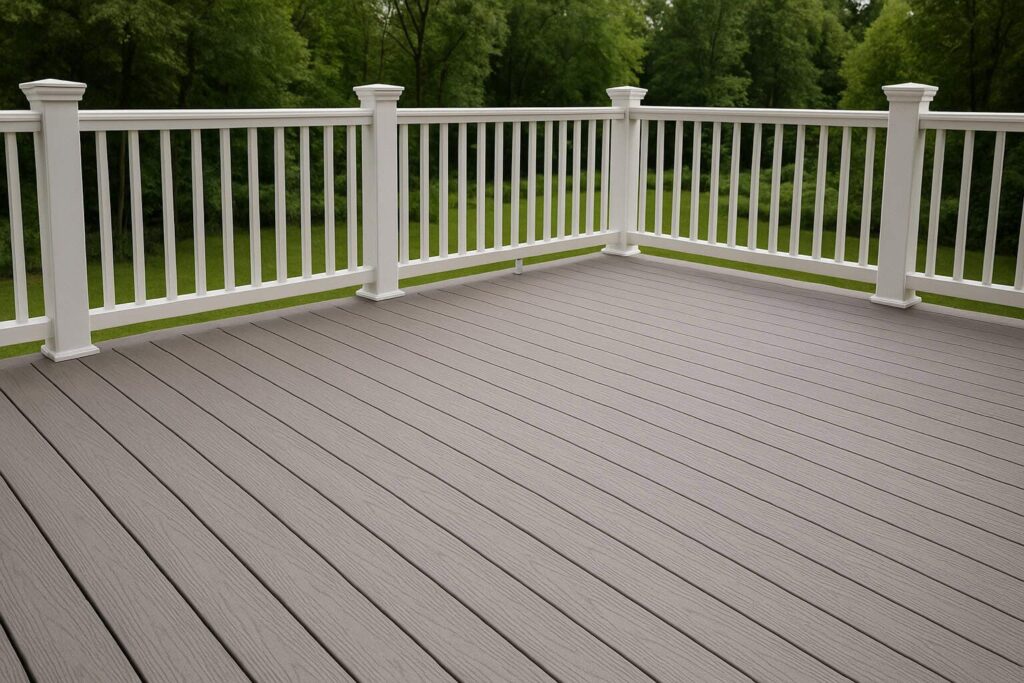
North Carolina asks a lot of a deck. Summer humidity sits above 70 percent for weeks at a time, afternoon sun bakes any surface facing west, thunderstorms roll through, and spring coats everything in a yellow-green film of pine pollen. A deck material that thrives in a dry climate can struggle here. So the real question for a Triangle homeowner is not just which decking looks best, but which one holds up to our specific weather. Here is how the common options actually perform in this climate.
Why our climate is hard on decks
Three forces do most of the damage around here. Moisture is the first: high humidity plus regular rain keeps wood damp, and damp wood is where rot, mold, and mildew take hold. Heat is the second: a dark surface in full Carolina sun gets hot enough to be uncomfortable underfoot and to expand and contract with every cycle. Movement is the third: our heavy clay soil swells when wet and shrinks when dry, which puts constant stress on footings and framing. The right material choice answers all three.
Pressure-treated wood: cheapest, but the climate fights you
Pressure-treated pine is the traditional deck material and the least expensive to install. It also demands the most from you in a humid climate. Left alone, it greys, checks, cups, and eventually rots. To keep it healthy in North Carolina you need to clean, stain, and seal it every two to three years, and that is not a suggestion. Miss a couple of cycles and the boards start to go. For a homeowner who enjoys the upkeep and wants the lowest starting price, it can work. For most, the maintenance clock is the catch.
Capped composite: built for humidity
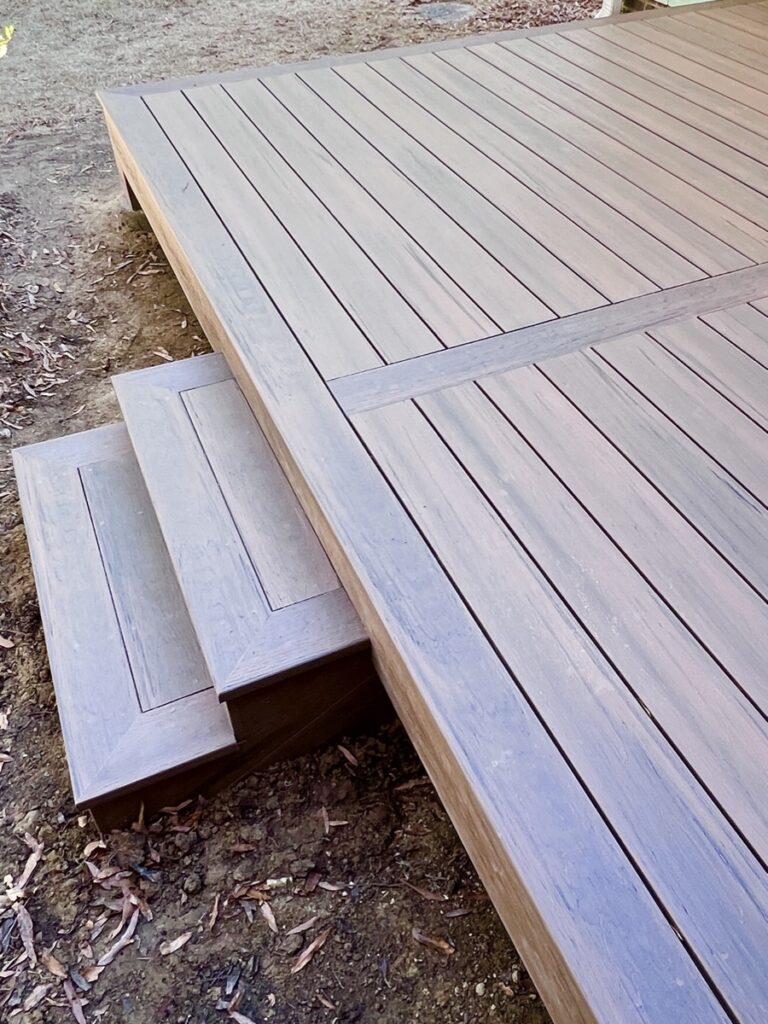
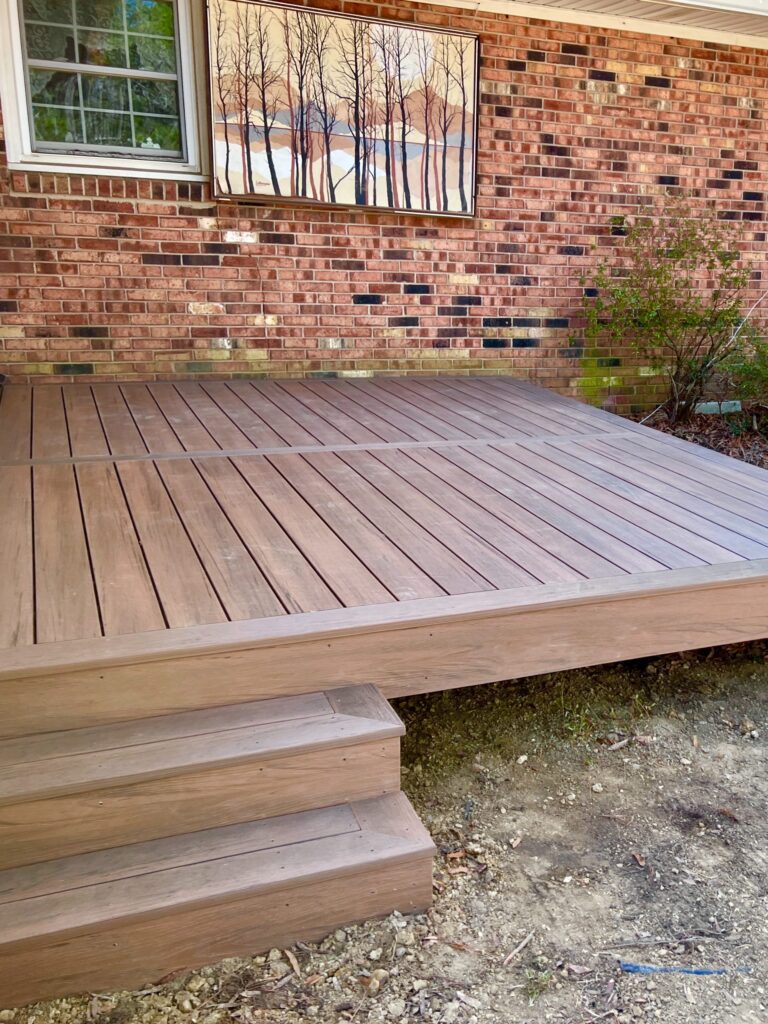
Capped composite is our most-recommended material for the Triangle, and the climate is a big reason why. The board is a wood-and-plastic core wrapped in a hard polymer shell, or cap, on all the exposed sides. That cap is the whole point in a humid place: water cannot soak into the board, so mold and rot have nothing to grab. Pollen and mildew rinse off the surface rather than staining it. It never needs staining or sealing, and it carries long fade and stain warranties. The tradeoff is a higher upfront cost, which pays back over the years you would otherwise spend maintaining wood.
Cellular PVC: the coolest, most moisture-proof option
Cellular PVC has no wood in it at all, which makes it the most moisture-proof decking you can buy. In a climate where wet is the default half the year, that matters. PVC is also lighter than composite and tends to stay cooler in direct sun, a real advantage on a west-facing deck that catches the full afternoon. It sits at the top of the price range, but for a homeowner who wants the best possible performance in our heat and humidity, it is hard to beat.
What about heat underfoot?
Every decking material gets warm in direct Carolina sun, and color matters more than brand. A dark board absorbs more heat than a light one, full stop. If your deck faces west or south and gets hammered in the afternoon, lean toward lighter tones, and consider PVC, which tends to run cooler than composite. If you have afternoon shade from the tree canopy that so many Triangle lots enjoy, heat is much less of a concern and you have more freedom with color.
The part homeowners forget: the framing
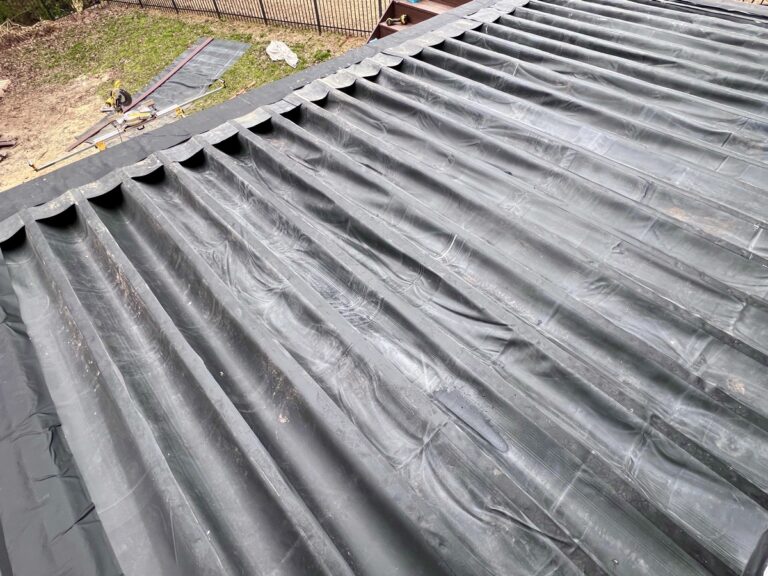
The boards you walk on get all the attention, but in our climate the structure underneath decides how long the deck lasts. Moisture attacks the framing and the ledger connection first. That is why we flash and waterproof the ledger board carefully on every build, and why we protect the tops of joists from standing water. The finish surface can be the best PVC money buys, but if the frame beneath it traps moisture, the deck will not go the distance.
Our recommendation for most Triangle homes
For the majority of homeowners in Raleigh, Cary, Apex, and the surrounding towns, capped composite hits the sweet spot: it shrugs off our humidity and pollen, never needs refinishing, and costs less than PVC. If budget is the top priority and you do not mind the maintenance, pressure-treated wood still builds a solid deck. If you want the coolest, most weatherproof surface available and the budget allows, PVC is the premium answer. There is no single right choice, only the right choice for your yard, your sun exposure, and how you want to spend your weekends.